

Living with persistent joint pain, arthritis, or a lingering injury can make everyday activities challenging. Whether you enjoy golfing, hiking around Southern Nevada, exercising, or simply spending time with family, discomfort can affect your mobility and quality of life. For patients exploring alternatives to conventional treatment, regenerative medicine is an increasingly discussed area of orthopedic care.
If you are researching regenerative medicine in Las Vegas, understanding the available procedures, potential benefits, limitations, and safety considerations is essential before making a treatment decision.
In 2026, regenerative medicine continues to attract attention because of developments in platelet-rich plasma (PRP) therapy, cell-based research, and image-guided orthopedic procedures. However, not all regenerative treatments have the same level of scientific evidence or regulatory approval.
At Nevada Stem Cell RMC, patients can explore available orthopedic regenerative options through a physician-directed consultation focused on their diagnosis, medical history, and treatment goals.
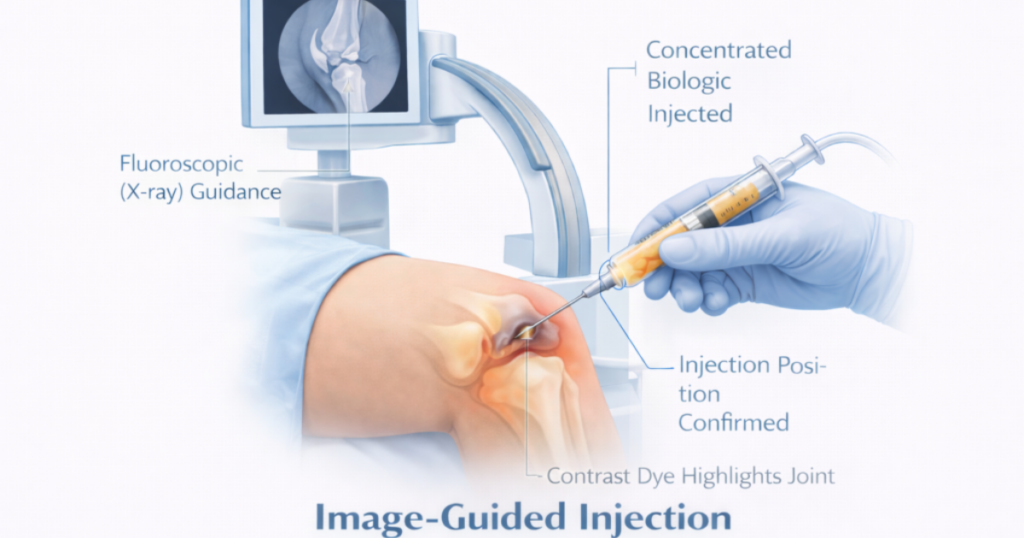
Featured in Nevada Stem Cell RMC’s article, “Regenerative Medicine in Las Vegas: What Are Your Treatment Options in 2026?”, the image explains how imaging guidance may be incorporated into certain orthopedic regenerative procedures.
Patients researching regenerative medicine in Las Vegas, including PRP therapy and other orthobiologic options, can learn why accurate injection placement, physician evaluation, clinical evidence, and treatment safety are important considerations. Image guidance may assist with procedural accuracy but does not establish the effectiveness of the injected biologic product.
Nevada Stem Cell RMC, located inside the Smith Plastic Surgery facility in Las Vegas, Nevada, provides consultations to help patients understand available orthopedic regenerative medicine options, potential risks, FDA regulatory considerations, and realistic treatment expectations.
What Is Regenerative Medicine?
Regenerative medicine is a field of healthcare that investigates ways to repair, replace, or support damaged cells, tissues, and organs. Some approaches use biological materials, while others involve engineered tissues, specialized cellular therapies, or treatments designed to influence the body’s natural healing processes.
In orthopedic care, regenerative medicine often refers to procedures involving platelet-rich plasma, tissue-derived biological preparations, or investigational cell-based treatments.
These approaches differ considerably in how they are prepared, administered, regulated, and supported by clinical research.
Although some regenerative technologies are established treatments for specific diseases, many orthopedic applications remain investigational. Patients should understand that regenerative medicine is not synonymous with proven tissue regeneration, and reducing pain does not necessarily demonstrate that damaged cartilage or tendons have been restored.
What Regenerative Medicine Treatments Are Available in Las Vegas in 2026?
Patients researching regenerative treatment options in Las Vegas may encounter several procedures involving blood-derived products, tissue-derived preparations, or stored biological materials.
Nevada Stem Cell RMC identifies four primary categories within its regenerative medicine services: PRP therapy, same-day adipose-derived stromal vascular fraction (SVF), umbilical tissue products, and cell banking.
Each option involves different procedures, potential risks, and medical considerations.
1. Platelet-Rich Plasma (PRP) Therapy
Platelet-rich plasma therapy uses a concentrated portion of a patient’s own blood. During the procedure, blood is collected and processed through a centrifuge to separate plasma containing an increased concentration of platelets. The preparation is then injected into the affected area.
Platelets contain proteins and growth factors involved in inflammatory signaling and tissue-repair processes. Researchers have investigated whether concentrating these components can help manage symptoms associated with certain orthopedic conditions.
PRP has been studied for knee osteoarthritis, tennis elbow, and selected tendon injuries. Evidence varies by condition, and clinical outcomes are not guaranteed.
The American Academy of Orthopaedic Surgeons states that PRP may reduce pain and improve function in symptomatic knee osteoarthritis, although its recommendation is supported by limited evidence.
Patients should ask whether PRP has meaningful clinical evidence for their specific diagnosis rather than assuming it works equally well for every joint or injury.
2. Same-Day Adipose-Derived SVF Procedures
Stromal vascular fraction, commonly called SVF, is a mixture of cells obtained from fat tissue. The mixture may contain several cell types, including stromal, vascular, and immune-related cells. Some regenerative medicine providers investigate adipose-derived preparations for orthopedic applications.
These procedures typically involve collecting a small amount of the patient’s own fat tissue and processing it to obtain a cellular preparation. This makes the procedure more involved than a conventional PRP injection.
However, adipose-derived SVF is not equivalent to a purified stem cell treatment, and the presence of certain cells does not establish that an injection can rebuild damaged cartilage.
The FDA has not approved adipose-derived SVF products for treating orthopedic conditions such as osteoarthritis. Patients considering SVF should ask about the specific processing method, applicable FDA requirements, available clinical evidence, and potential procedural complications.
3. Umbilical Tissue Products
Umbilical tissue products are derived from donated tissues associated with childbirth. Depending on the preparation, these products may contain structural components or other biological materials. They are sometimes marketed as regenerative treatment options for joint discomfort and orthopedic conditions.
However, products derived from umbilical tissues should not automatically be described as living stem cell treatments. Their composition varies, and claims about their ability to regenerate tissue require appropriate scientific evidence.
The FDA warns that umbilical cord-derived regenerative products have not been approved for orthopedic conditions.
Before considering any donor-derived biological product, patients should understand its source, processing, regulatory status, infection-control measures, and known risks.
4. Cell Banking for Potential Future Use
Cell banking involves collecting biological material and preserving cells under controlled conditions for possible future applications. Nevada Stem Cell RMC identifies adipose-derived cell banking among its services. The concept is to preserve biological material that may potentially be considered for future treatment.
However, banking cells do not guarantee that a future procedure will be medically appropriate, legally available, or clinically effective.
Patients should ask about storage costs, long-term viability, processing procedures, access to stored material, and the regulatory requirements that would apply to any future use. Cell banking is best understood as a preservation service rather than a proven treatment for an existing orthopedic condition.
Stem Cell Therapy in Las Vegas: What Does the Research Actually Show?
Interest in stem cell therapy in Las Vegas has grown alongside research into cellular signaling, inflammation, and tissue repair.
Laboratory studies and clinical investigations have explored whether certain cell-based approaches can influence musculoskeletal conditions. However, early research findings do not necessarily establish that a treatment is safe or effective for routine clinical use.
One important distinction is the difference between symptom improvement and structural repair. A patient may report less pain after a procedure without demonstrating that damaged cartilage has regenerated. Meaningful research must evaluate outcomes such as function, imaging findings, durability of benefit, and adverse events.
Patients researching stem cell treatment in Las Vegas should therefore carefully distinguish between established medical uses of approved cell therapies and investigational orthopedic procedures.
What Orthopedic Conditions Are Being Studied?
Regenerative medicine research includes several musculoskeletal conditions that can affect active adults throughout Las Vegas, Henderson, and surrounding Southern Nevada communities.
Knee Arthritis and Joint Discomfort
Knee osteoarthritis can cause stiffness, swelling, and discomfort during walking, climbing stairs, or recreational activities.
PRP has been investigated as a possible option for symptom management in selected patients. However, it does not reliably reverse advanced arthritis or eliminate the need for joint replacement when surgery is medically indicated.
Hip Pain and Mobility Limitations
Hip discomfort may result from arthritis, tendon injuries, bursitis, or other musculoskeletal problems. Because these conditions require different treatments, accurate diagnosis is essential before considering an injection.
Patients should understand that evidence supporting regenerative injections for hip conditions remains limited and varies by diagnosis.
Shoulder Injuries
Shoulder pain may involve rotator cuff tendons, arthritis, inflammation, or structural damage.
PRP and other biological approaches have been investigated for certain shoulder problems, but outcomes are inconsistent across conditions and studies.
A physician may recommend rehabilitation, conventional injections, surgery, or other established treatments depending on the injury.
Elbow and Tendon Problems
Tennis elbow and related tendon conditions can affect golfers, recreational athletes, and people whose jobs involve repetitive arm movements.
PRP has been studied for selected chronic tendon disorders, although findings vary and it is not universally recommended.
Patients should compare the available evidence with established approaches such as activity modification and physical therapy.
How Do Physicians Determine Whether Regenerative Treatment Is Appropriate?
Choosing an orthopedic treatment requires more than identifying where pain occurs. A responsible evaluation considers the underlying diagnosis, previous treatments, general health, imaging findings, and patient expectations.
At Nevada Stem Cell RMC, the clinic describes a physician-directed approach that emphasizes medical history, imaging review, and patient selection.
The evaluation may include several important considerations:
- Medical history: Reviewing chronic conditions, current medications, previous injuries, and relevant procedures.
- Diagnostic imaging: Examining available X-rays, MRI studies, or other imaging when clinically appropriate.
- Condition severity: Determining whether symptoms are related to mild degeneration, significant structural damage, or another diagnosis.
- Treatment alternatives: Discussing physical therapy, medication, conventional injections, surgery, or continued monitoring.
- Realistic expectations: Explaining the available evidence, possible risks, financial considerations, and uncertainty surrounding outcomes.
The clinic also describes using fluoroscopic imaging guidance with contrast for applicable procedures to confirm injection placement.
Accurate placement is an important technical consideration, but imaging guidance does not establish that a particular regenerative product is clinically effective.
Are Regenerative Medicine Treatments FDA-Approved?
FDA approval is one of the most important questions patients should ask when exploring regenerative medicine in 2026.
The FDA has approved certain blood-forming stem cell products derived from umbilical cord blood for specific disorders affecting blood formation. These approvals do not extend to treating orthopedic problems such as arthritis, back pain, or tendon injuries.
The agency has also warned about risks associated with unapproved regenerative products, including infection, unwanted immune responses, and other serious complications.
PRP prepared from a patient’s blood has a different regulatory framework from many cell-based products. Nevertheless, the use of a cleared preparation device does not mean every clinical application has been FDA-approved or proven effective.
Patients should ask exactly what product or procedure is being recommended and what evidence supports its intended use.
What Should Patients Expect During Recovery?
Recovery depends on the procedure, treatment location, medical history, and individual response. Some injections may cause temporary soreness, swelling, or discomfort. Procedures involving tissue collection may require additional recovery time because of the harvesting process.
Patients should discuss physical activity restrictions, rehabilitation, pain management, and follow-up care before scheduling treatment.
It is also important to establish how outcomes will be measured. Improvements in daily activity, mobility, and symptoms may be more meaningful than vague promises of cellular regeneration. No responsible provider can guarantee a specific recovery timeline or complete symptom relief.
Frequently Asked Questions About Regenerative Medicine in Las Vegas
What is the difference between PRP and stem cell treatment?
PRP uses a concentrated preparation of platelets from the patient’s blood. Cell-based procedures involve biological materials containing different cell populations. They differ in invasiveness, regulatory requirements, risks, and supporting evidence.
Is regenerative medicine a replacement for surgery?
Not necessarily. Certain patients may explore nonsurgical options, but severe arthritis, significant structural damage, or other conditions may require surgical treatment. Regenerative injections should not delay necessary medical care.
How much does regenerative medicine cost in Las Vegas?
Costs vary according to the procedure, number of treatment sessions, preparation method, and clinical requirements. Many investigational orthopedic treatments are not covered by insurance, so patients should request written pricing before proceeding.
Does stem cell therapy work for arthritis?
Research continues, but stem cell products have not been FDA-approved for treating arthritis. Patients should be cautious about claims that injections reliably regrow cartilage, reverse joint degeneration, or eliminate the need for surgery.
How do I choose a regenerative medicine provider in Las Vegas?
Look for qualified medical professionals, transparent explanations of regulatory status, evidence-based recommendations, appropriate imaging when indicated, and clear discussion of risks. A trustworthy consultation should also explain when regenerative treatment is not recommended.
Explore Regenerative Medicine Options With Nevada Stem Cell RMC
Understanding the differences between PRP, tissue-derived preparations, and other regenerative approaches can help patients make more informed healthcare decisions.
For individuals researching stem cells in Las Vegas, the most important considerations are accurate diagnosis, scientific evidence, regulatory status, realistic expectations, and physician-guided decision-making.
Nevada Stem Cell RMC offers consultations for patients interested in discussing orthopedic regenerative medicine options. Its approach emphasizes individualized evaluation, imaging review, and consideration of treatment alternatives rather than assuming one procedure is appropriate for every patient.
If ongoing joint discomfort is affecting your daily activities, a consultation can help clarify your diagnosis and the available next steps.
Contact Nevada Stem Cell RMC to discuss your orthopedic concerns and learn which treatment options may be appropriate for you.
Nevada Stem Cell RMC
7650 West Sahara Avenue
Las Vegas, NV 89117
Phone: (702) 838-2455
Website: https://stemcell.vegas/
Medical References and Further Reading
- American Academy of Orthopaedic Surgeons. Management of Osteoarthritis of the Knee: Clinical Practice Guideline.
https://www.aaos.org/globalassets/quality-and-practice-resources/osteoarthritis-of-the-knee/oak3cpg.pdf - Nevada Stem Cell RMC. About Nevada Stem Cell RMC.
https://stemcell.vegas/about-rmc/
Medical Disclaimer: This article provides general educational information and does not replace professional medical advice, diagnosis, or treatment. Regenerative therapies vary in regulatory status and supporting clinical evidence. Patients should consult qualified healthcare professionals before pursuing any procedure.